Facts
To understand the arguments pro and con below, here are a few preliminary facts:
-
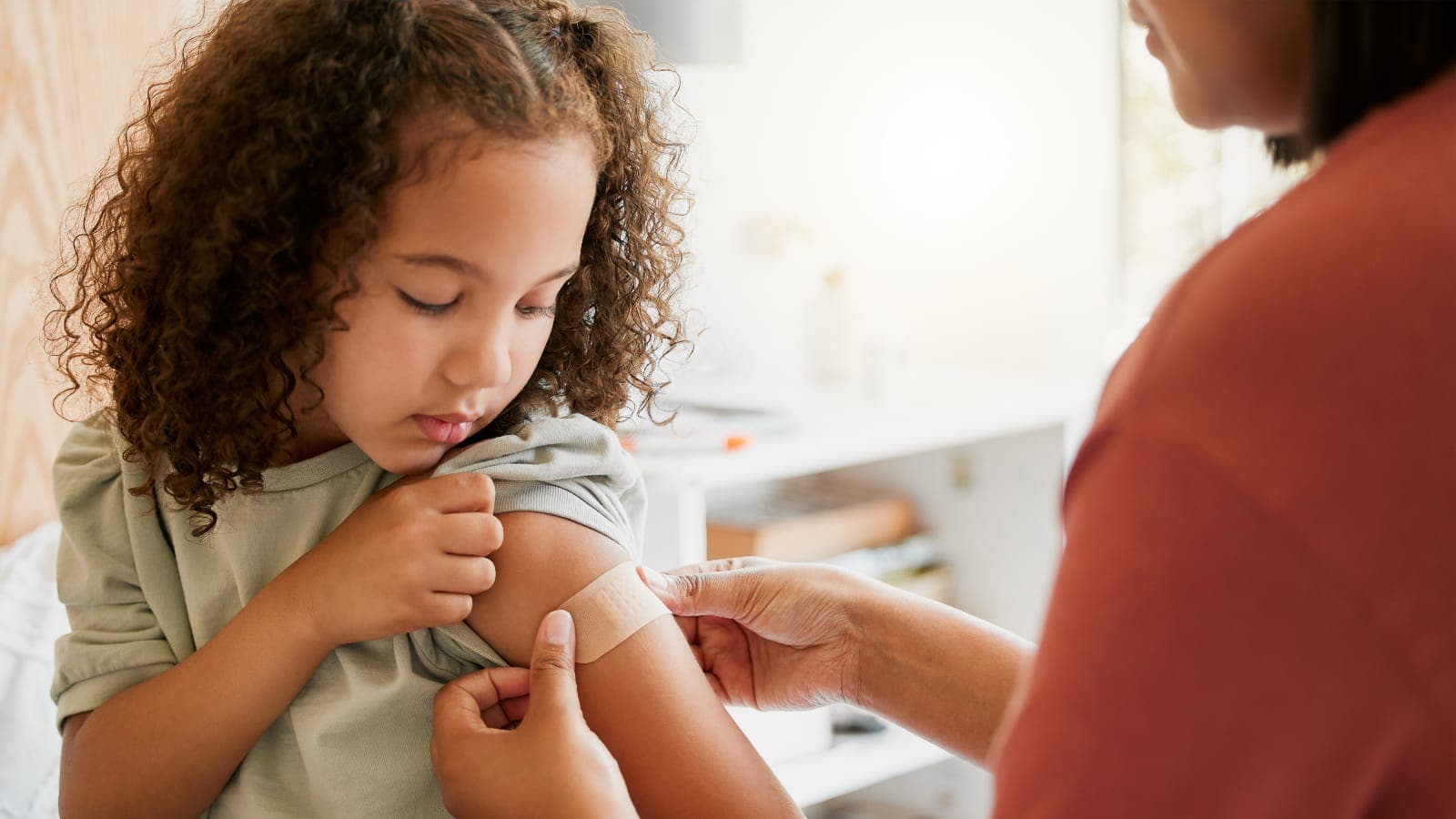
Usually given as an injection, a vaccine trains the immune system to recognize and fight the cause of a disease. This lowers the risk of getting the disease, or of getting very sick from it.1
-
Every U.S. state requires a core set of vaccinations for children to attend school. In this guide, the term “core school vaccines” refers to those protecting against diphtheria, tetanus, whooping cough, polio, measles, mumps, rubella, chickenpox, and hepatitis B. Every U.S. state requires most or all of this set. Many states also require other vaccines, such as meningococcal and hepatitis A.2
-
A scientific and medical consensus says the core school vaccines are safe and effective. This topic is among the most studied in medicine, including concerns raised by vaccine skeptics such as a potential link between vaccines and autism. The overwhelming evidence has shown no such link.3
-
In extremely rare cases, a vaccine can cause a serious reaction. The best documented is a severe allergic reaction, which a large study put at roughly one per million doses. Compensation data point to a similar rate: the federal Vaccine Injury Compensation Program compensated roughly one person per million doses of MMR (measles, mumps, and rubella) vaccine distributed from 2006 through 2024.4
-
Most parents with doubts about vaccines are not against all vaccines. Rather, they may have concerns about the number of vaccines, their timing, or a specific vaccine. In a 2025 survey of parents of children under 18, only 6% considered themselves to be “anti-vaccine,” whereas 48% were “pro-vaccine,” and 45% were “somewhere in the middle.”5 On the separate question of whether states should require vaccines, various polls have found solid majority support, with the level depending on when, how, and whom the question was asked.6
-
The policy debate is about which vaccines, if any, states should require, and how strictly. Options range from recommending vaccines without requiring them, to requiring them with broad exemptions, to requiring them with medical exemptions only. Some people who oppose requirements still vaccinate their children fully; they are just against the state requiring it. Others are concerned about one or more vaccines’ safety and want to avoid those specific requirements. Few argue that the core school vaccines should be unavailable to those who want them.
Factors to Consider
Below are four factors to consider about vaccine requirements for school attendance, each with opposing arguments. At the end of this guide, Editorial Choices lists several factors and arguments we did not include in this main section with explanations why.
1. Medical Authority
Although each state has its own list of required vaccines, they are mostly the same, based on recommendations from major medical organizations and the U.S. government’s Centers for Disease Control and Prevention (CDC). Much of the debate is about how far states should go in enforcing these recommendations as requirements.
Opponents of vaccine requirements argue that states have gone overboard in making recommendations into requirements. They note that U.S. states’ vaccine requirements are more extensive than those of most countries in the European Union, many of which require few or no childhood vaccinations.7 Opponents cite chickenpox (varicella) as an example. Before the vaccine, it rarely led to hospitalization, and very rarely led to death; for the vast majority of children it meant a week of fever and itchy blisters, and it was long considered too mild to be worth preventing at all.8 Yet after a chickenpox vaccine became available in 1995, every state eventually made it a requirement for school.9 In comparison, as of 2024, only three of the 30 countries in the European Union and European Economic Area required it, and half did not include it in their national recommendations at all.10 For U.S. parents who believe children receive too many shots,11 opponents say, skipping chickenpox is a reasonable choice, and requiring it symbolizes the overreach of public health authorities into decisions that parents should be making in consultation with their child’s doctor.
Supporters of vaccine requirements argue that the growth of requirements reflects accumulated lessons, not overreach: each vaccine was added because a disease was still harming children, and the nation’s major physician organizations continue to recommend a complete schedule of vaccinations.12 Supporters acknowledge that chickenpox is usually mild, but because it was so widespread before the vaccine (4 million U.S. cases annually), the numbers added up: 10,500 to 13,500 hospitalizations, and 100 to 150 deaths a year. Since then, hospitalizations have fallen 90% and deaths among children have been practically eliminated.13 Supporters add that the United Kingdom added chickenpox vaccine to its routine childhood schedule in 2026,14 and the U.S. CDC retained it in 2026 despite narrowing other recommendations.15 As for Europe, supporters note that six countries introduced or extended overall vaccination requirements between 2014 and 2024.16 They argue that countries such as Norway reach high vaccination rates without requirements because of strong public trust in vaccines and health authorities17—a condition they say many parts of the U.S. do not share.
What else to know: The concept of medical authority has been complicated by the tenure of Health and Human Services Secretary Robert F. Kennedy Jr., a long-time critic of federal vaccine policy.18 Appointed to his post by President Trump in 2025, Kennedy has attempted to reduce the CDC’s vaccine recommendations, arguing that the U.S. schedule was out of line with those of peer countries;19 a court has suspended those changes in a lawsuit brought by major medical organizations.20 As of August 2026, most states had announced they would no longer follow CDC recommendations for some or all childhood vaccines, relying instead on sources such as the American Academy of Pediatrics.21 Meanwhile, some other states had been moving the other direction, loosening exemptions or, in Florida’s case, trying to eliminate all requirements.22
The key question: Should states require all the core school vaccines that major medical organizations recommend, or should parents be able to decide about some or all of them?
2. Herd Immunity
For contagious diseases that can spread at school, vaccination is not just about protecting the child. Having a high vaccination rate can protect the community if the disease appears and starts to spread. This concept is called herd immunity (also known as population immunity).
For measles, a highly contagious disease, public health officials commonly target 95% vaccination coverage.23 With measles, one infected person in a fully susceptible population infects roughly twelve to eighteen others, so almost everyone around a case must be immune for transmission to stop.24 The lower the percentage of people who are immune, the faster and wider an outbreak can spread. For example, in recent years, some communities with lower vaccination rates have seen large outbreaks, such as a 2025 West Texas outbreak that sickened 762 people, hospitalized 99, and killed two unvaccinated children.25 A 2026 outbreak in Pennsylvania had more than 1,000 cases, and five measles-associated deaths.26
Opponents of vaccine requirements argue that the pursuit of herd immunity does not justify overriding parents’ right to decide what goes into their children’s bodies. Some take this view as a matter of principle, that parents’ rights should trump group protection; they add that vaccinated children are well protected, so most of the added risk falls on unvaccinated children whose parents accepted that risk. Others note that herd immunity can accommodate a small percentage of people with sincere objections, like how the military draft has made room for conscientious objectors. In addition, some would accept emergency measures, like keeping unvaccinated children at home, in case of a nearby outbreak. What they won’t accept is a pre-emptive requirement that every parent must vaccinate every healthy child for every disease on the list.
Supporters of vaccine requirements argue that for contagious diseases, rejecting vaccination is not a private choice. It increases the risk to those who depend on herd immunity: infants too young for certain vaccines, children who can’t be vaccinated for medical reasons (such as those undergoing cancer treatment), and the small share of vaccinated people for whom a vaccine doesn’t work.27 As for room to accommodate objectors, supporters of requirements note that nationwide vaccination rates for measles are already a few percentage points below the safe target,28 and 2026 has seen more measles cases than any year since 1991.29 They also make a fairness argument: exemptions let some healthy children benefit from herd immunity without accepting the small risks that other families accept to provide it. Finally, they argue that keeping unvaccinated children home during an outbreak comes too late, since classmates are often exposed before a case is identified.30 In their view, if parents want their child in school, they need to vaccinate to do their part in keeping students and staff safe.
The key question: Does protecting others through herd immunity justify requiring vaccination for contagious diseases, or should individual parents’ judgment prevail?
3. Protecting the Child
Some school vaccination requirements protect against diseases that do not spread through ordinary classroom contact. Tetanus does not spread from person to person at all; hepatitis B can spread between people, but rarely through ordinary contact at school. For these diseases, the case for requiring vaccination rests more on protecting the child than on preventing spread at school.31
Opponents of vaccine requirements argue that when an unvaccinated child poses little or no infection risk to classmates, vaccination should not be a condition of school attendance. They say that parents, consulting their doctors, should decide, even when public health officials believe vaccination would better protect the child. For distracted or uninformed parents, they favor reminders, education, and easier access. For deliberate refusals, they argue that exclusion causes far greater harm to the child than going without a tetanus vaccine or delaying a hepatitis B vaccine, especially when families cannot afford the time or money for homeschooling alternatives. The state, they say, should not respond to a parental decision it considers harmful to the child by imposing a worse harm.
Supporters of vaccine requirements argue that children have an interest in protection from serious, preventable illness even when their parents object. With diseases like tetanus or hepatitis B, they say, it is the child who could die or suffer lifelong illness because of the parents’ decision. Whether the vaccine protects against a disease that spreads at school or one that threatens only the child, they argue that tying vaccination to school attendance is the most practical way to reach nearly every child, including those whose parents are distracted or uninformed. As for the harm of exclusion, they argue that it should be weighed across all children rather than one family at a time: a requirement works only if it is enforced, and the few children kept out of school are outweighed by the many who are protected because of it.32
The key question: Should states require vaccination to protect a child’s own health when leaving that child unvaccinated does not endanger classmates?
4. Exemptions
All states allow medical exemptions from school vaccine requirements, and most states allow other exemptions. In order of narrowest to broadest exemptions:
-
4 states (California, Connecticut, Maine, New York) allow only medical exemptions.
-
29 states and Washington, DC, allow non-medical exemptions for religious reasons only.
-
17 states allow both religious and personal-belief exemptions.33
In the 2025–26 school year, a record 4.2% of kindergartners had an exemption from at least one required vaccine. Since 2019–20, nearly all the growth has come from nonmedical exemptions, which rose from 2.2% to 4.0%. Medical exemptions declined slightly, from 0.3% to 0.2%.34
Opponents of vaccine requirements argue that if a state insists on vaccine requirements, it should also have exemptions for families with sincere objections. In their view, exemptions offer a compromise: vaccination remains the standard, but parents do not have to violate deeply held beliefs to send their children to school. Some opponents specifically favor religious exemptions, arguing that freedom of religion deserves special protection when a government requirement conflicts with a family’s faith, even if their church does not officially teach that objection.35 Others argue that a nonreligious conviction can be just as deeply held, and that the state should not favor religious parents over other conscientious objectors. Allowing both kinds, they say, avoids asking school officials to judge whether a family’s beliefs are genuinely religious, and removes the incentive for parents with secular objections to present them as religious. Some add that states can require exemption-seeking parents to make an informed, deliberate choice—for example, by first discussing vaccination with a health care provider and formally documenting their objection—to discourage people from claiming exemptions simply for convenience.36
Supporters of vaccine requirements argue that although exemptions may seem like a reasonable compromise, sincere belief (whether religious or nonreligious) does not reduce the chance that an unvaccinated child will catch or spread an infection. As for the special status of religious exemptions, they note that few religious traditions formally oppose vaccination.37 They also cite evidence that religious exemptions are often used for non-religious reasons when a more general personal-belief exemption is unavailable.38 They argue that eliminating both religious and personal-belief exemptions produces larger and more lasting gains in vaccination than eliminating personal-belief exemptions alone.39 Finally, they caution that even a small statewide exemption rate can conceal much higher rates in particular schools or communities, where families with similar beliefs cluster.40 Taken together, these reasons cause supporters of vaccine requirements to say that exemptions should only be for narrow medical reasons, as recognized by mainstream medical standards.41
The key question: Which kind(s) of exemption make sense?
Example Viewpoints
The questions above represent genuine tensions without easy answers. Below are examples of how different people might weigh these and other considerations to arrive at coherent positions. You might find yourself aligning with one of these viewpoints, or you might form your own opinion by combining elements from more than one.
Public Health Advocate
Vaccination should be strictly required to attend school, both to protect those in the school community and to ensure all children get the full schedule of vaccines needed to protect themselves. That schedule should be based on recommendations from major medical organizations, and the only exemptions should be the medical ones those organizations recognize. Where states allow broader exemptions, needless tragedies like the 2025 West Texas measles outbreak are more likely. While I understand that some parents are concerned about the number and timing of required vaccines, an overwhelming amount of research says they are safe. And I don’t think it’s fair to allow some parents to not vaccinate to avoid an extremely small risk of a serious side effect, because their children still benefit from herd immunity that depends on everyone else accepting that same small risk. So when some say childhood vaccination should be a matter of parental choice, I disagree: it’s the child, not the parent, who bears the consequences of that choice, and with a contagious disease, classmates and others outside the family can suffer too.
Workable Status Quo
Vaccination should be the clear expectation for every child in school, using the full schedule supported by major medical organizations. Still, parents with a sincere religious or moral objection should be able to opt out, particularly if doing so requires the “friction” of parents reviewing information about vaccination and formally documenting their objection. The system needs to accommodate these parents in a way that doesn’t penalize their children by keeping them out of normal school. Most of these parents aren’t against vaccines altogether; their concerns are usually about particular vaccines or their timing. And as long as the numbers stay low, herd immunity can still be maintained. In essence, this is the situation we have in 45 states and Washington, DC, which allow at least religious exemptions. Medically, I don’t think it’s ideal but practically it strikes a workable balance. Where exemptions push vaccination rates well below herd immunity, I’d be open to tightening further.
Targeted Requirements
Vaccine requirements are justified, but only for vaccines that protect against serious diseases that spread at school. Measles, polio, and whooping cough clearly qualify. Some others on today’s lists don’t. Tetanus and hepatitis B rarely or never spread at school, so requiring them mainly protects the child rather than classmates, and that decision belongs to parents and their doctors. Chickenpox spreads easily, but for most children it is mild, so it should be a choice more like the flu vaccine. Parents who want these vaccines can choose them, but let’s not force vaccines on parents when the case for doing so isn’t crystal clear. For the vaccines where the case is clear, I would allow only medical exemptions, because a sincere objection does not remove the risk to others.
Parental Choice Advocate
Public health officials may recommend a vaccine schedule but they should not impose a one-size-fits-all requirement as a condition of attending school. Instead, parents should have the choice to decide what is best for their children’s individual situations, in consultation with their doctors. This includes accounting for medical circumstances and religious or personal beliefs. Others may disagree with a parent’s decision, but that doesn’t justify keeping the child out of school. And although herd immunity matters, it shouldn’t override parents’ authority over what goes into their child’s body. Many European countries have no or minimal vaccine requirements, so less regulation can work. In the U.S. every state should remove vaccine requirements or, absent that, allow broad exemptions for any sincere objection.
Deciding
The debate about vaccine requirements for school mixes questions of parental rights, children’s health, protection of the wider community, and trust in medical authority. It’s no surprise that reasonable people reach different conclusions. Our goal has been to give you the facts, arguments, and a range of viewpoints to help inform your own thinking. What you decide is up to you.
(If you are wondering about something we didn’t mention, check the Editorial Choices section below. It includes other aspects of the debate we didn’t include in the main content, with explanations why.)
Appendix: Editorial Choices
In writing this guide, there were many choices to make—for example, how to frame the issue, which factors, arguments, and viewpoints to include, and how to phrase them. For those interested, below are notable choices. You can quickly scan the topics, clicking any for details.
Naming and Framing
We recognize that perceptions can be swayed by how a topic is framed and by the terminology used. For this guide’s topic, we chose “Vaccine Requirements for School” because it is a straightforward description that does not implicitly favor a particular side. Similarly, the subtitle “Should states require vaccination for children to attend K–12 school?” is a neutral question that allows for a range of possible answers.
We chose the word “requirement” over “mandate,” another term used in the discourse. “Requirement” is the more commonly used term in the relevant laws and by neutral sources such as the National Conference of State Legislatures.42 Given that every state allows exemptions, one might say that “requirement” itself is too strong, but we found it to be the best pairing with “recommendation,” which is a recurring contrast in the guide.
Measuring the Risk of Serious Side Effects
A sub-debate exists about how to best measure the risk of serious side effects for vaccines. In the Facts section, we used the figure “roughly one per million doses.” Here is why.
The most reliable measures come from studies that track confirmed reactions in a defined population. The best-documented serious reaction is a severe allergic reaction, which a study of more than 25 million doses found at a rate of about 1.3 per million.43 Some less serious reactions are more common; for example, MMR vaccine slightly raises the risk of seizures triggered by fever.44
Compensation data point to a similar rate. The federal Vaccine Injury Compensation Program generally compensates only injuries that last more than six months, require hospitalization and surgery, or result in death. The program has compensated roughly one person per million doses of MMR vaccine. One can argue that this number overestimates injuries because most awards are settlements that include no finding that the vaccine caused the injury; conversely, one could say it underestimates injuries because many injuries are never claimed due to families being unaware of the program.45 Either way, the one-in-a-million order of magnitude makes the point that the risk is very remote.
Figures from the federal Vaccine Adverse Event Reporting System (VAERS) are also widely cited, sometimes as counts of vaccine injuries. VAERS is designed as an early warning system: anyone can report a health problem following vaccination, and unusual patterns in the reports can prompt the kind of studies described above.46 Like injury-compensation data, VAERS counts can overstate harm (because a report does not establish that the vaccine caused the problem) and understate it (because not every problem is reported). But unlike compensation claims, VAERS reports are not limited to serious injuries and need not be backed by medical records, so its totals are not comparable to the figures above.
Who Decides What’s Required
States differ in who decides which vaccines are required for school. In some, the legislature lists every required vaccine in law. In others, the legislature sets a general requirement and lets a state agency, usually the health department, choose the specific vaccines. Many states mix the two modes.47 Some opponents of requirements argue that because a requirement compels parents, the list should be set only by elected legislators, not by a state agency through regulation. Defenders of the agency approach say health officials can apply medical expertise and respond to outbreaks and new vaccines more quickly than legislatures can.
Although it’s conceivable that someone’s position on vaccine requirements could be based on whether the requirements are set by legislation versus a state agency, we saw little evidence of that in the discourse. As a result, we are mentioning it here rather than in the main content.
Statistical versus Imminent Risk
Some opponents of vaccine requirements argue that the chance of a child catching a disease like measles at school is remote, and that a remote statistical risk doesn’t justify a standing requirement. In their view, the state may act against a specific, imminent threat of an outbreak, but it shouldn’t compel parents to further reduce a risk that is unlikely to materialize.
The problem with this argument is that the risk of an outbreak is remote because the vast majority of the community is vaccinated. So the remoteness of the risk cannot be a justification for not vaccinating.
A stronger version of the argument concedes that the risk is low because of widespread vaccination, but holds that one family’s choice barely changes it. This raises the question of whether some families with healthy children should benefit from herd immunity without contributing to it. The Herd Immunity factor covers this in the supporters’ fairness argument.
Backlash Risks
Some opponents argue that vaccine requirements defeat their own purpose. They say that forcing parents to choose between vaccination and school invites a backlash among some parents who resent being told what to do but who could be otherwise open to persuasion. In this view, public health would be better served by information and voluntary vaccination than by turning a medical decision into a cultural and political fight.
Although it has intuitive appeal, the evidence does not support the idea that more requirements or fewer exemptions mean less vaccination. In U.S. states that removed nonmedical exemptions, kindergarten vaccination rates rose compared to states that kept them.48
Opponents say that stronger backlash may yet come. They point to recent signs, including the rise in nonmedical exemptions since 2019,49 Florida’s push to eliminate requirements,50 and federal pressure on states to loosen their laws.51 Supporters respond that these developments began during the COVID-19 pandemic, amid widespread misinformation and a broad decline in trust in health institutions, long after routine school requirements were in place.52
Because the case for backlash is not well established, we have noted it here rather than in the main content.
Public Opinion
Supporters of vaccine requirements often note that U.S. public opinion has long favored requirements. Opponents point to a decline in support during the COVID-19 pandemic, implying that the trend is on their side. A review of national polls from 2015 to 2023 found that support fell by 10 to 12 percentage points during the pandemic, depending on the poll: from 82% to 84% before the pandemic to 70% to 74% in late 2022 and early 2023.53 More recent polls by the Harvard T.H. Chan School of Public Health found support of 79% in 2025 and 77% in 2026.54 Other recent surveys have found results from 65% to 81%, depending on the population surveyed and the question’s wording.55
The simplest version of the question—do you favor or oppose vaccine requirements for school?—is of limited use, because the policy debate is more about which vaccines should be required and which exemptions should be allowed. Some polls get closer to those details:
-
Number of Vaccines: Harvard’s 2026 poll found 42% supported reducing the number of vaccines the federal government recommends for children.56
-
Types of Vaccines: A 2025 YouGov poll of American adults asked about specific vaccines. Of the core school vaccines, MMR (measles, mumps, and rubella) was most favored to be required: 75% in favor, 13% against, and 12% not sure. The least favored, hepatitis B, was 42% in favor, 28% against, and 30% not sure.57
-
Exemptions: The same YouGov poll asked respondents to select all the reasons that, in their opinion, justify exempting a child: 72% selected a medical condition, 33% religious beliefs, 10% philosophical beliefs, and 17% “parents do not need a reason”; 16% selected “none of the above.” (Because the exemption question offered no “not sure” option, we can’t infer the percentage of people who oppose each item versus are unsure.)58
Except for a brief mention in Facts, we cover public opinion here rather than in the main content because neither side’s core case rests on it. Supporters of requirements, such as the American Academy of Pediatrics, ground their position in disease risk and vaccine safety; opponents ground theirs in parental rights and skepticism of government mandates. If public opinion reversed, those reasons would remain. Although public opinion can matter in practical ways—requirements depend on legislative support and families’ willingness to comply, as discussed in Backlash Risks—readers should judge the issue on its merits rather than its polling.
The Vaccine Injury Liability Shield
Opponents of vaccine requirements often point to the National Childhood Vaccine Injury Act of 1986.59 It limits product-liability lawsuits against manufacturers of covered vaccines. Instead, it established a federal program that families can use to make compensation claims for harm caused by a vaccine. Opponents say this is not fair to parents, who are required to vaccinate their children yet are denied the normal means of holding manufacturers legally accountable for injuries. Opponents also say the liability shield weakens manufacturers’ incentive to make vaccines safer.
Supporters argue that the National Vaccine Injury Compensation Program is a reasonable way to ensure a competitive and predictable market of vaccine suppliers. Before it was established, two of three domestic suppliers of DTP (diphtheria, tetanus, and pertussis) vaccine had withdrawn from the market due to increasing lawsuits alleging serious side effects.60 The program was meant to compensate people injured by vaccines while limiting litigation that could threaten the supply of vaccines critical for public health.
The program is funded by a tax on each vaccine dose rather than by general tax revenue. For the MMR vaccine, it has paid compensation for roughly one per million doses. A payment does not necessarily mean the vaccine caused the injury; most awards across the program are settlements without a causation finding.61
We note this subtopic here rather than in the main content because controversies about the National Vaccine Injury Compensation Program are mostly separate from the question of whether vaccines should be required for school. If the liability shield went away, people who favor vaccine requirements for school would still do so, and people who oppose them would likely be cheered but not satisfied. Furthermore, most current proposals would reshape the program rather than abolish it, primarily by adding or removing covered vaccines and injuries.62
Review of Exemptions
Every state allows medical exemptions by a child’s doctor. Some states allow review of doctors’ decisions.
Supporters of vaccine requirements favor some state review, at least where exemptions cluster, to catch exemptions that don’t meet mainstream medical standards. They point to California, where state officials review exemptions at schools with vaccination rates less than 95% and by doctors with five or more exemptions.63 They note that this policy followed California’s elimination of non-medical exemptions; after that, medical exemptions tripled and health officials reported physicians advertising exemptions online for a fee.64
Opponents of exemption reviews worry that the threat of review will make doctors reluctant to grant exemptions that are legitimate.
We’ve left this topic to the appendix because it is secondary to the main debate.
What About HPV?
Opponents of vaccine requirements often highlight the HPV (human papillomavirus) vaccine as particularly problematic. HPV spreads mainly through sexual contact, not ordinary contact at school, so preventing classroom transmission can’t justify requiring it for school. Opponents also argue that a vaccine given at ages 11–12 to prevent a sexually transmitted infection touches on family values in a way other vaccines don’t, making it a decision that belongs to parents.
Supporters respond that HPV causes several types of cancer, including cervical cancer, and that the vaccine works best when given well before any exposure. They add that HPV remained on the shorter list of vaccines the CDC recommends for all children after the federal schedule was narrowed in 2026.65
We did not include HPV as an example in the main text because it’s only required in three states and Washington, DC.66
Religious Exemptions and the Constitution
Some opponents of vaccine requirements argue that the Constitution’s protection of religious freedom requires states to allow religious exemptions. Courts have mostly rejected that argument,67 but the Supreme Court may revisit the issue. In Mahmoud v. Taylor (2025), the Court held that when public school instruction substantially interferes with parents’ religious upbringing of their children, it can face the Court’s strictest review even if it applies to everyone equally.68 On that basis, Amish families are challenging New York state’s lack of a religious exemption for vaccine requirements.69 If the Court were to accept the case and rule in favor of the families, the “medical exemptions only” option favored by some viewpoints could be limited or no longer available to states.
Footnotes
-
How Do Vaccines Work? World Health Organization, February 25, 2025. ↩
-
State Vaccine Requirements for Children, KFF, accessed September 28, 2026. ↩
-
Institute of Medicine, The Childhood Immunization Schedule and Safety: Stakeholder Concerns, Scientific Evidence, and Future Studies, National Academies Press, 2013; on autism: Institute of Medicine, Immunization Safety Review: Vaccines and Autism, National Academies Press, 2004. ↩
-
In a study of more than 25 million vaccine doses, the rate of confirmed vaccine-triggered anaphylaxis (a severe allergic reaction) was 1.31 per million doses. (Michael M. McNeil et al., Risk of Anaphylaxis after Vaccination in Children and Adults, Journal of Allergy and Clinical Immunology 137, no. 3 (2016): 868–878.) (On compensation: National Vaccine Injury Compensation Program Monthly Statistics Report, Health Resources & Services Administration, updated September 1, 2026; 42 U.S.C. § 300aa-11.) For more on assessing the risk of serious reactions, see Measuring the Risk of Serious Side Effects in Editorial Choices. ↩
-
Of those in the “somewhere in the middle” group, 78% have kept their children fully vaccinated, and 22% have skipped or delayed at least one vaccine. Of all parents surveyed, 26% believed that the Centers for Disease Control and Prevention recommends too many vaccines, 41% believed children are healthier when their vaccines are spaced out rather than given several at one visit, and 81% believed public schools should require measles and polio vaccines with some exceptions while 18% said schools should not require them for any students. (KFF/The Washington Post Survey of Parents, KFF, October 10, 2025.) ↩
-
Recent results range from 65% to 81% support for at least some vaccine requirements. See Public Opinion in the Editorial Choices section for details and nuances. ↩
-
As of 2024, 17 of the 30 countries in the European Union and European Economic Area had no mandatory childhood vaccinations, relying on recommendations alone; the other 13 required at least one vaccine. (Sara Farina et al., Childhood Mandatory Vaccinations: Current Situation in European Countries and Changes Occurred from 2014 to 2024, Vaccines 12, no. 11 (2024): 1296.) ↩
-
A 2023 CDC presentation said, “Historically, varicella was considered [a] disease of little consequence, too mild to warrant prevention.” (Mona Marin, 25 Years of Varicella Vaccination Program in the United States: Health and Economic Impact during 1995–2019, presentation to the Advisory Committee on Immunization Practices, Centers for Disease Control and Prevention, February 23, 2023.) Chickenpox usually lasts about four to seven days, and complications are uncommon in healthy people. (Chickenpox Symptoms and Complications, Centers for Disease Control and Prevention, May 10, 2024.) ↩
-
Varicella Vaccine Requirements for Childcare and School (K–12), Immunize.org, May 2026. ↩
-
Sara Farina et al., Childhood Mandatory Vaccinations: Current Situation in European Countries and Changes Occurred from 2014 to 2024, Vaccines 12, no. 11 (2024): 1296. ↩
-
In a 2025 survey of parents of children under 18, 26% believed that the Centers for Disease Control and Prevention recommends too many vaccines, and 41% believed children are healthier when their vaccines are spaced out rather than given several at one visit. (KFF/The Washington Post Survey of Parents, KFF, October 10, 2025.) ↩
-
The American Academy of Pediatrics’ 2026 schedule recommends routine vaccination against 18 diseases, including every disease covered by state school requirements. The AAP’s schedule has been endorsed by 12 medical and health organizations, including the American Academy of Family Physicians, the American Medical Association, the American College of Obstetricians and Gynecologists, and the Infectious Diseases Society of America. (Sean T. O’Leary and Committee on Infectious Diseases, Recommended Childhood and Adolescent Immunization Schedule: United States, 2026, policy statement, Pediatrics 157, no. 3 (2026): e2025075754; Melissa Jenco, AAP’s 2026 Immunization Schedule Keeps Routine Recommendations Intact after Overhaul of Federal Schedule, AAP News, January 26, 2026.) ↩
-
Children accounted for more than 90% of cases, 70% of hospitalizations, and 50% of deaths. Hospitalizations declined 90% from 1993 to 2019, and deaths among people under 20 have been practically eliminated. (Mona Marin, 25 Years of Varicella Vaccination Program in the United States: Health and Economic Impact during 1995–2019, presentation to the Advisory Committee on Immunization Practices, Centers for Disease Control and Prevention, February 23, 2023.) ↩
-
Hundreds of Thousands of Young Children Now to Be Protected against Chickenpox, NHS England, January 2, 2026. ↩
-
Fact Sheet: CDC Childhood Immunization Recommendations, U.S. Department of Health and Human Services, January 5, 2026. ↩
-
The six countries were Croatia, France, Germany, Hungary, Italy, and Poland. (Sara Farina et al., Childhood Mandatory Vaccinations: Current Situation in European Countries and Changes Occurred from 2014 to 2024, Vaccines 12, no. 11 (2024): 1296.) ↩
-
Norway has no mandatory childhood vaccinations. In 2025, an estimated 96% of Norwegian children received a first dose of measles vaccine and 95% a second dose. (Norway: WHO and UNICEF Estimates of Immunization Coverage: 2025 Revision, World Health Organization and UNICEF, July 7, 2026.) A 2024 review of European vaccination policies observed that some countries maintain high coverage through recommendations alone, driven by strong public trust in the health system and effective communication. (Sara Farina et al., Childhood Mandatory Vaccinations: Current Situation in European Countries and Changes Occurred from 2014 to 2024, Vaccines 12, no. 11 (2024): 1296.) ↩
-
Before becoming head of the Department of Health and Human Services, Kennedy founded Children’s Health Defense, a group that has questioned vaccine safety and policy. (Jessica McDonald, FactChecking Robert F. Kennedy Jr., FactCheck.org, August 9, 2023.) ↩
-
In January 2026, federal health officials cut the number of diseases for which the CDC recommends vaccinating all children from 18 to 11, citing the schedules of 20 wealthy peer countries and holding up Denmark’s 10-disease schedule as a model. (Adopting Revised Childhood and Adolescent Immunization Schedule, decision memo, U.S. Department of Health and Human Services, January 5, 2026.) Critics noted that the peer countries averaged about 14 diseases, and that the new U.S. schedule covers fewer than any of them except Denmark. (Helen Branswell, When It Comes to Vaccine Schedules, the U.S. Is Now the Outlier, STAT, January 9, 2026.) ↩
-
On March 16, 2026, a federal district court in Massachusetts suspended the new schedule and restored the previous one. It also suspended the appointments of the advisory committee members named by HHS Secretary Robert F. Kennedy Jr. and all votes those members had taken. The government appealed to the First Circuit on April 29, 2026. (The 2026 Childhood Immunization Schedule, R48982, Congressional Research Service, June 11, 2026.) ↩
-
State and Local Policies on School Vaccine Requirements: Overview and Current Status, KFF, August 21, 2026. ↩
-
Since 2025, at least nine states have made nonmedical exemptions easier to obtain, for example by reducing documentation or procedural requirements. (State and Local Policies on School Vaccine Requirements: Overview and Current Status, KFF, August 21, 2026.) In an attempt to go further, Florida’s governor and surgeon general in 2025 called for eliminating the state’s vaccine requirements. (Curt Anderson, Florida Plans to Become First State to Eliminate All Childhood Vaccine Mandates, Associated Press, September 3, 2025.) In its 2026 sessions, the Florida legislature did not take up such legislation, but the state’s health department is attempting to remove some requirements and broaden exemptions. (Florida Proposes Dropping 4 Vaccines from School Entry Requirements, FOX 13 Tampa Bay, August 24, 2026.) ↩
-
For example, the U.S. Department of Health and Human Services’ “Healthy People 2030” initiative has a goal of 95% coverage of the MMR vaccine for children in kindergarten. (Maintain the Vaccination Coverage Level of 2 Doses of the MMR Vaccine for Children in Kindergarten — IID‑04, Healthy People 2030, accessed August 15, 2026.) ↩
-
Lien Anh Ha Do and Kim Mulholland, Measles 2025, New England Journal of Medicine 393, no. 24 (2025): 2447–2458. ↩
-
Measles Outbreak – August 12, 2025, Texas Department of State Health Services, August 12, 2025. ↩
-
Pennsylvania Department of Health Provides Statewide Update on Measles Outbreak as Cases Reach 1,338 in 44 Counties, Pennsylvania Department of Health, October 23, 2026. ↩
-
Saad B. Omer et al., Vaccine Refusal, Mandatory Immunization, and the Risks of Vaccine-Preventable Diseases, New England Journal of Medicine 360, no. 19 (2009): 1981–1988. ↩
-
For the 2025–26 school year, kindergarten MMR coverage was 92.4%, 2.6 percentage points below the 95% target. (Vaccination Coverage and Exemptions among Kindergartners, Centers for Disease Control and Prevention, updated August 17, 2026.) Coverage had been 95.2% in 2019–20. (Ranee Seither et al., Vaccination Coverage with Selected Vaccines and Exemption Rates among Children in Kindergarten — United States, 2019–20 School Year, Morbidity and Mortality Weekly Report 70, no. 3 (2021): 75–82.) ↩
-
As of October 23, 2026, the CDC had counted 4,588 confirmed measles cases in 2026, 96% of them linked to outbreaks. (Measles Cases and Outbreaks, Centers for Disease Control and Prevention, updated October 23, 2026.) The 2025 total of 2,289 cases had been the most since 1991 until 2026 surpassed it in July. (Jim Wappes, US Measles Cases Approach 3,300—over 1,000 More Than All of Last Year, CIDRAP, September 11, 2026.) ↩
-
People with measles can spread it as early as four days before a rash appears. Early symptoms resemble a cold and are followed two to four days later by a rash. Exposed people without immunity may be eligible for preventive vaccination, but only within 72 hours of exposure. (Healthcare Providers: Stay Alert for Measles Cases, Centers for Disease Control and Prevention, updated January 26, 2026.) ↩
-
With tetanus, there is a practical constraint: the vaccine is given in the United States only in combination with diphtheria vaccine, and usually also with whooping cough (pertussis) vaccine. So there isn’t a way to opt out of the tetanus vaccine without also losing vaccination for one or more other contagious diseases. (Tetanus Vaccine Recommendations, Centers for Disease Control and Prevention, September 10, 2026.) ↩
-
In practice, few families appear to choose exclusion. After California eliminated nonmedical exemptions in 2016, homeschooling rates for kindergarten through grade 8 did not rise beyond their existing upward trend. (Kevin M. Patel et al., Evaluation of Trends in Homeschooling Rates after Elimination of Nonmedical Exemptions to Childhood Immunizations in California, 2012–2020, JAMA Network Open 5, no. 2 (2022): e2146467.) ↩
-
As of September 2026, West Virginia’s religious and personal-belief exemptions were on hold pending a state Supreme Court ruling. Washington, DC, and Virginia also allow a personal-belief exemption for the HPV vaccine only. (State Non-Medical Exemptions from School Immunization Requirements, National Conference of State Legislatures, updated September 1, 2026. NCSL counts 16 states as allowing both religious and personal-belief exemptions because it classifies Minnesota as allowing a personal exemption only. However, Minnesota’s single non-medical exemption, Minn. Stat. § 121A.15, subdiv. 3(d) (2025), is for the “conscientiously held beliefs” of a parent or guardian and does not distinguish between religious and secular beliefs.) ↩
-
Vaccination Coverage and Exemptions among Kindergartners, Centers for Disease Control and Prevention, updated August 17, 2026; for the 2019–20 comparison: Kindergarten Routine Vaccination Rates Continue to Decline, KFF, August 21, 2026. ↩
-
For example, some religious parents object to the rubella, chickenpox, and hepatitis A vaccines because they were developed using cell lines descended from fetal tissue obtained from abortions in the 1960s, and no alternatives are available in the United States. The Catholic Church, however, has concluded that using these vaccines is morally permissible because a recipient’s connection to those past abortions is remote and outweighed by a moral obligation to maintain the vaccination coverage needed to protect others. (What Does the Catholic Church Teach about Vaccines? EWTN News, May 6, 2019.) ↩
-
When Washington state began requiring parents to get a health care provider’s signature confirming they had been counseled on the benefits and risks of vaccination before claiming an exemption, kindergarten exemption rates fell by 40% (2.9 percentage points), and coverage rose for every required vaccine except hepatitis B. (Saad B. Omer et al., Exemptions from Mandatory Immunization after Legally Mandated Parental Counseling, Pediatrics 141, no. 1 (2018): e20172364.) ↩
-
A review of major religions’ teachings found that few give believers a reason to refuse vaccines—Christian Science is a notable exception. The review also found that when people cited religion as their reason for refusing vaccines, the real concern was often a belief common within their religious community, such as worry about vaccine safety, rather than anything their faith teaches. (John D. Grabenstein, What the World’s Religions Teach, Applied to Vaccines and Immune Globulins, Vaccine 31, no. 16 (2013): 2011–2023. The author was employed by Merck Vaccines, a vaccine manufacturer, when he wrote the review, a potential conflict of interest the paper discloses. We found no published criticism of the paper’s factual claims.) ↩
-
When Vermont ended its personal-belief exemption in 2016 but kept its religious exemption, the share of kindergartners with a religious exemption rose from 0.5% to 3.7%. (Joshua T. B. Williams et al., Religious Vaccine Exemptions in Kindergartners: 2011–2018, Pediatrics 144, no. 6 (2019): e20192710. See also Helen Branswell, Rise in Religious Vaccine Exemptions Suggests Some Parents Are Making False Claims, Study Suggests, STAT, November 4, 2019.) ↩
-
When California, New York, Maine, and Connecticut removed all nonmedical exemptions, relatively few families switched to medical exemptions, and kindergarten vaccination rates rose relative to states that kept their exemptions. Within three years of repeal, overall exemption rates fell by 3.2 percentage points, medical exemptions rose by only 0.4 percentage points, and kindergarten vaccination rates rose by 2.8 to 4.1 percentage points relative to states that kept their exemptions, depending on the vaccine. (Anthony Bald et al., State Repeal of Nonmedical Vaccine Exemptions and Kindergarten Vaccination Rates, JAMA Pediatrics 180, no. 1 (2026): 56–63.) ↩
-
A study of the period before California’s removal of nonmedical exemptions found that Waldorf private schools averaged a personal-belief exemption rate of 45%. (Julia M. Brennan et al., Trends in Personal Belief Exemption Rates among Alternative Private Schools: Waldorf, Montessori, and Holistic Kindergartens in California, 2000–2014, American Journal of Public Health 107, no. 1 (2017): 108–112.) ↩
-
For example, California requires physicians to issue medical exemptions through a centralized state system, where they are reviewed against the American Academy of Pediatrics’ criteria for medical contraindications. West Virginia requires medical exemptions to follow guidance from the CDC’s Advisory Committee on Immunization Practices, the American Academy of Pediatrics, and the American Academy of Family Physicians. (State and Local Policies on School Vaccine Requirements: Overview and Current Status, KFF, August 21, 2026.) ↩
-
State Non-Medical Exemptions from School Immunization Requirements, National Conference of State Legislatures, updated September 1, 2026. ↩
-
Michael M. McNeil et al., Risk of Anaphylaxis after Vaccination in Children and Adults, Journal of Allergy and Clinical Immunology 137, no. 3 (2016): 868–878. ↩
-
Measles, Mumps, Rubella (MMR) Vaccine Safety, Centers for Disease Control and Prevention, July 31, 2024. ↩
-
National Vaccine Injury Compensation Program Monthly Statistics Report, Health Resources & Services Administration, updated September 1, 2026; 42 U.S.C. § 300aa-11. ↩
-
VAERS is co-managed by the Centers for Disease Control and Prevention and the Food and Drug Administration. (About VAERS, Vaccine Adverse Event Reporting System, accessed October 14, 2026.) ↩
-
For example, Pennsylvania, Mississippi, South Carolina, and Virginia delegate the choice of vaccines largely to state agencies. Kentucky, Maine, and West Virginia list the required diseases in state law. Arkansas and Florida set some requirements in law and leave others to the health department. (State and Local Policies on School Vaccine Requirements: Overview and Current Status, KFF, August 21, 2026.) ↩
-
Anthony Bald et al., State Repeal of Nonmedical Vaccine Exemptions and Kindergarten Vaccination Rates, JAMA Pediatrics 180, no. 1 (2026): 56–63. ↩
-
The share of kindergartners with an exemption from one or more required vaccines rose from 2.5% in 2019–20 to 4.2% in 2025–26. Nonmedical exemptions rose from 2.2% to 4.0%, while medical exemptions declined slightly, from 0.3% to 0.2%. (Kindergarten Routine Vaccination Rates Continue to Decline, KFF, August 21, 2026.) ↩
-
Curt Anderson, Florida Plans to Become First State to Eliminate All Childhood Vaccine Mandates, Associated Press, September 3, 2025. ↩
-
A 2026 executive order directs the Attorney General to support legal actions challenging state laws that conflict with states’ obligations, as the order describes them, to provide religious and medical exemptions. It also directs federal agencies to ensure that states and other grantees comply with those obligations. (Delivering Gold Standard Childhood Vaccine Recommendations for Americans, Executive Order 14420, White House, August 10, 2026.) ↩
-
KFF reports that the declines in kindergarten vaccination and increases in exemptions began during the COVID-19 pandemic, amid widespread vaccine misinformation and a broader decline in trust in health authorities. (Kindergarten Routine Vaccination Rates Continue to Decline, KFF, August 21, 2026.) ↩
-
The pre-pandemic figures are from Pew Research Center (2016) and Harvard T.H. Chan School of Public Health (2019) polls. The later figures are from Harvard (late 2022) and Pew (early 2023). In Harvard’s series, support was 84% in 2019, 78% in 2021, and 74% in 2022. Gillian K. SteelFisher et al., Has COVID-19 Threatened Routine Childhood Vaccination? Insights from US Public Opinion Polls, Health Affairs Forefront, June 6, 2023. ↩
-
The 2026 poll surveyed 2,205 U.S. adults March 19–April 1, 2026. Requirements were favored by 91% of Democrats and 65% of Republicans. The report gives the 2025 figure for comparison. Harvard T.H. Chan School of Public Health and de Beaumont Foundation, One Year In: Public Views of a Changing Public Health Landscape, June 2026. ↩
-
In a survey of parents of children under 18 conducted July 18–August 4, 2025, 81% said public schools should require measles and polio vaccines with some exceptions. (KFF/The Washington Post Survey of Parents, KFF, October 10, 2025.) In an August 2026 poll of U.S. adults, 65% said students in K–12 schools should be required to have vaccinations. (Taylor Orth, 65% of Americans Support Vaccine Requirements for K-12 Schools, YouGov, August 11, 2026.) ↩
-
Harvard T.H. Chan School of Public Health and de Beaumont Foundation, One Year In: Public Views of a Changing Public Health Landscape, June 2026. The question asked about reducing the number of vaccines the federal government recommends, not the number states require. Federal recommendations had long formed the basis of most state school requirements, but after the federal schedule changes under Health and Human Services Secretary Robert F. Kennedy Jr., most states announced they would no longer follow CDC recommendations for some or all childhood vaccines. (See Medical Authority.) ↩
-
The poll surveyed 1,067 U.S. adult citizens April 1–4, 2025. (Jamie Ballard, What Americans Think of Childhood Vaccinations, YouGov, April 28, 2025; full results: YouGov Survey: Vaccines, YouGov, accessed October 14, 2026.) ↩
-
The poll surveyed 1,067 U.S. adult citizens April 1–4, 2025. (Jamie Ballard, What Americans Think of Childhood Vaccinations, YouGov, April 28, 2025; full results: YouGov Survey: Vaccines, YouGov, accessed October 14, 2026.) ↩
-
National Childhood Vaccine Injury Act of 1986, Pub. L. No. 99-660, tit. III, 100 Stat. 3755 (codified as amended at 42 U.S.C. §§ 300aa-1 to 300aa-34). ↩
-
Bruesewitz v. Wyeth LLC, 562 U.S. 223, Supreme Court of the United States, February 22, 2011, pt. I-A. ↩
-
National Vaccine Injury Compensation Program Monthly Statistics Report, Health Resources & Services Administration, updated September 1, 2026. ↩
-
CDC’s Updated Childhood Vaccine Schedule: Litigation and Potential Implications for Vaccine Injury Compensation Program, LSB11427, Congressional Research Service, May 4, 2026. ↩
-
California’s 2019 law (SB 276) requires state review of medical exemptions at schools with vaccination rates below 95% and from doctors who submit five or more exemptions in a year. It allows the state to revoke exemptions that don’t meet federal or AAP criteria or the relevant standard of care. It also requires doctors to submit exemptions on a standardized state form, certified under penalty of perjury, and bars them from charging for filling it out. A child whose exemption is revoked may stay in school while an appeal is pending. (SB 276, Immunizations: Medical Exemptions, Chapter 278, Statutes of 2019, California Legislature, September 9, 2019.) ↩
-
Medical exemptions among California kindergartners rose from 0.2% in 2015–16, the year before the state’s elimination of personal-belief exemptions took effect, to 0.7% in 2017–18. In interviews, local health officers and immunization staff described exemptions they considered medically unjustified, including some from physicians who advertised them online for a fee. (Salini Mohanty et al., Experiences with Medical Exemptions after a Change in Vaccine Exemption Policy in California, Pediatrics 142, no. 5 (2018): e20181051.) ↩
-
In January 2026, federal health officials cut the number of diseases for which the CDC recommends vaccinating all children to 11, including HPV. (HHS Announces Major Updates to Childhood Immunization Schedule, State Health and Value Strategies, January 9, 2026.) ↩
-
State Vaccine Requirements for Children, KFF, accessed September 28, 2026. ↩
-
Challengers have argued that because states allow medical exemptions, refusing religious exemptions treats religious objectors worse than secular ones. Most courts have rejected this, reasoning that medical exemptions protect children who cannot be vaccinated while religious exemptions do not. An exception is Bosarge v. Edney, where a federal district court in Mississippi required the state to offer religious exemptions in a case in which no party defended their absence. (Bosarge v. Edney, No. 1:22-cv-00233, United States District Court for the Southern District of Mississippi, April 18, 2023.) ↩
-
Mahmoud v. Taylor, 606 U.S. 522, Supreme Court of the United States, June 27, 2025. ↩
-
In December 2025, the Supreme Court sent the case back to the Second Circuit to reconsider in light of Mahmoud. The Second Circuit again ruled for New York, and the families have asked the Supreme Court to hear the case a second time. (Miller v. McDonald, No. 24-681, United States Court of Appeals for the Second Circuit, June 30, 2026; Joseph Goldstein, Amish Families Pushed to Undo a Vaccine Law. Then Measles Arrived. New York Times, October 20, 2026.) ↩
Thank you for reading! How likely are you to recommend this guide to a friend interested in the topic?
0 = Not at all likely, 10 = Extremely likely